Hello, this is CloverJ.
As we continue to monitor the major economic shifts of 2026—following our recent look into [whether your 2026 tax refund will be bigger under the new OBBBA deductions]—another critical turning point has arrived.
On the evening of April 1, 2026, President Donald Trump delivered a national address from the White House regarding the conflict with Iran, now widely referred to as Operation Epic Fury. In his remarks, Trump argued that the war is “nearing completion,” while also warning that the coming two to three weeks may determine whether the conflict moves toward diplomacy or a broader escalation.
At first glance, this looked like a wartime update. But from my perspective, it was also something else: a speech about oil, inflation risk, market psychology, and America’s role in global order. Today, CloverJ Finance looks at the key signals from this address and why this is not just a geopolitical story, but an economic one as well.
1. The Core Message: The Operation Is Nearing Completion
The primary message of the address was that the military campaign is entering its final stage. According to the official briefing, the administration claims that significant degradation of opposing military capabilities has been achieved, suggesting that the initial strategic objectives are close to being met.
What stood out to me was the framing. This was not presented as another open-ended Middle East conflict. Instead, the narrative centered on a short, forceful campaign that has already delivered its intended results. This distinction is vital for investors, as markets price a limited, “contained” conflict very differently from a prolonged war of attrition.
2. The Heaviest Part of the Speech: The Strategic Warning
While the President spoke of progress, the more significant signal lay in the warning about the immediate future. The official transcript indicates a window of two to three weeks for diplomatic movement, failing which, strikes could expand to include broader power and energy infrastructure.
To me, this was the center of gravity of the entire speech. It was a message designed for energy markets and global stakeholders trying to gauge the ceiling of this confrontation. If diplomacy advances within this window, markets may find a floor. However, if the deadline passes without a resolution, oil and inflation concerns could resurface rapidly. This is why the address must be read through a lens of economic risk management.
3. Oil and the Strait of Hormuz at the Center of Gravity
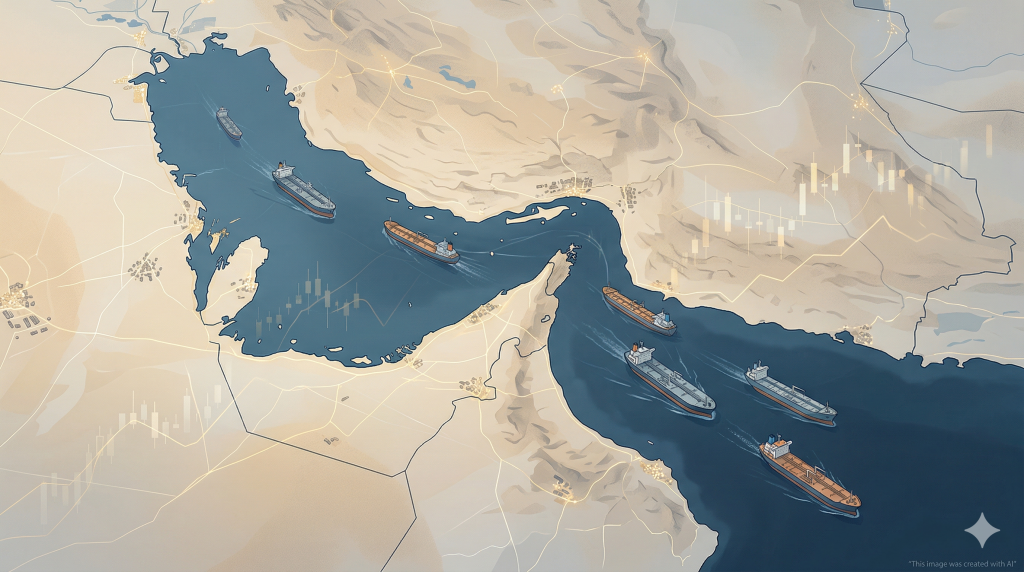
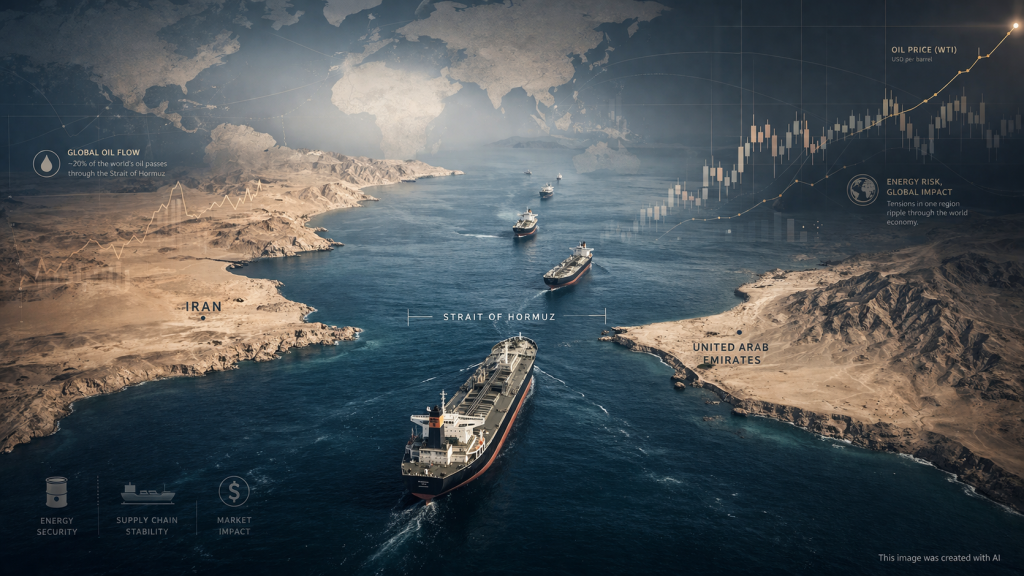
Energy security remained a dominant theme. The address pointedly linked rising global energy costs to the current instability and reiterated the necessity of securing the Strait of Hormuz—the world’s most critical maritime chokepoint. While some international partners have expressed hesitation regarding the use of force to reopen the strait, the administration remains firm on its stance.
From a beginner’s point of view, this is the clearest lesson: a political crisis in the Middle East can transform into a global economic event almost instantly. Higher oil prices do not stay confined to the news; they feed into inflation, raise shipping costs, and weigh on broader market sentiment.
4. “America First” and the Economics of Global Order
The speech also argued that nations benefiting most from the security of trade routes should bear a greater share of the financial and military burden. This aligns with a broader “America First” approach, where U.S. power is central but not provided as a subsidized service for the global community.
To me, this is where the speech moved beyond military tactics and into the question of global order. Foreign policy is often discussed in strategic terms, but it fundamentally comes down to cost allocation. Who pays for stability? Who bears the risk? When the answers to these questions become uncertain, markets inevitably react to that instability.
5. Future Outlook: Monitoring the Economic Feedback Loop
Looking at the overall situation, it is clear that the narrative has shifted from the battlefield to the broader economy. The underlying concern for many analysts is the lack of a detailed roadmap for post-conflict stabilization, despite the confidence projected in the address.
Based on the current trajectory, these are the areas I would watch most closely:
- Energy Volatility: If the Strait of Hormuz remains a zone of contention, crude prices will likely maintain a high-risk premium.
- Inflationary Pressure: Sustained energy costs could reignite inflation discussions, impacting consumer sentiment even if the conflict remains geographically distant.
- Safe-Haven Demand: As long as the endgame remains undefined, investors may continue to hedge against further geopolitical shocks.
CloverJ’s Final Assessment: Trump’s address functioned as much as a market signal as it did a wartime update. It attempted to project control and reassure the public while maintaining maximum pressure. However, the real test of Operation Epic Fury will not just be military success, but whether oil prices and investor confidence can stabilize under this cloud of uncertainty.
CloverJ’s Take: Big political events become economic events faster than beginners expect. This address was about energy flows and inflation risk just as much as it was about security. Looking at politics through an economic lens makes the stakes much easier to understand.
Clarity in facts brings clarity to the economy. This is CloverJ.
![[Fed Watch] Why the Fed Kept Rates Steady in March 2026: The Paradox of “Robust Spending”](https://cloverj.com/wp-content/uploads/2026/03/Gemini_Generated_Image_ms6sgdms6sgdms6s-1024x592.png)