Hello! This is CloverJ, and welcome back to my finance study journey.
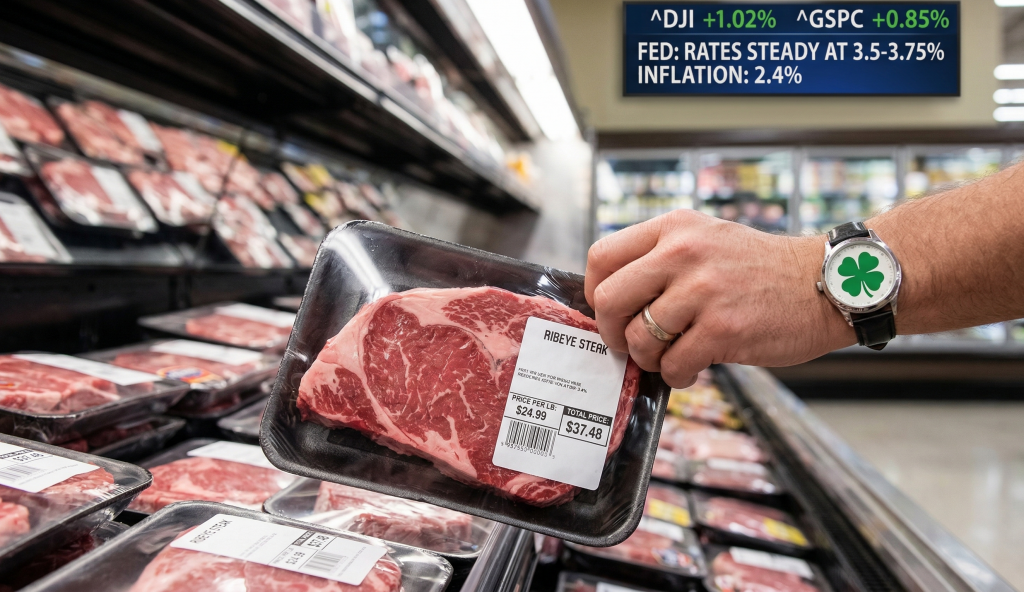
If you’re living in the U.S. and have recently sighed at the price of groceries, you might find the latest headlines a bit frustrating. While we’re feeling the pinch at the checkout counter, the news keeps reporting that “U.S. consumer spending remains robust,” making it difficult for the Fed to cut interest rates.
Today, I’m diving into the Federal Reserve’s March 2026 decision and the “uncomfortable truths” behind the data.
1. The Decision: Another “Hold” in March 2026
On March 18, 2026, the Federal Reserve decided to keep the federal funds rate steady at 3.5% to 3.75%. This marks the second consecutive pause this year.
- Current Inflation: 2.4% (Based on the latest CPI report)
- The Fed’s Target: 2.0%
Why is the Fed so hesitant to cut rates over a mere 0.4% difference? Let’s break it down.
2. The Magic Number: Why 2% and Not 0%?
I used to think 0% inflation would be ideal, but I learned that it can actually be dangerous for the economy.
- Preventing Deflation: If prices stop rising (0%), people start delaying purchases, hoping for even lower prices tomorrow. This can lead to an economic standstill.
- The Safety Buffer: A 2% target provides a “cushion.” It ensures the Fed has enough “ammunition” (room to cut rates) when a real crisis hits. Essentially, 2% is the minimum warmth needed to keep the economic engine running smoothly.
3. The Paradox: Beef Prices vs. Economic Statistics
This was the most confusing part for me: “If consumers are struggling, why does the data say spending is strong?” I found three hidden reasons:
- Inelastic Demand: Items like beef, milk, and eggs are essentials. Even when prices soar, we have to buy them. Statistics only see the total dollars spent, not the struggle of the person swiping the card.
- Debt-Fueled Spending: Many households are dipping into savings or relying on credit cards to maintain their lifestyle. While it looks like “economic vitality” on paper, it’s actually a sign of increasing financial pressure.
- The “K-Shaped” Gap: The high spending of wealthy households often masks the strict budgeting of lower-to-middle-income families. The “average” data doesn’t tell the whole story.
📚 Economy 101: Key Terms for Your Study Note
| Term | Simple Definition | Analogy |
| The Fed (Federal Reserve) | The central bank of the U.S. that controls the money supply. | The ‘Captain’ of the U.S. economic ship. |
| Interest Rate | The cost of borrowing money (or the reward for saving it). | The ‘Price’ of money. |
| Inflation | A continuous rise in prices that lowers the value of your money. | A $10 burger last year now costing $12. |
| Hold (Pause) | Keeping the interest rate the same without raising or lowering it. | A ‘Wait and See’ approach to check the market’s pulse. |
| Hawkish | An aggressive stance to fight inflation by raising or maintaining high rates. | An ‘Eagle’ hunting down rising prices. |
| Dovish | A gentle stance that favors lower interest rates to boost the economy. | A ‘Dove’ seeking peace and growth. |
💡 CloverJ’s Personal Take
“While the numbers say the economy is ‘robust,’ the reality at the grocery store feels quite different. It seems we are in a tug-of-war between official statistics and our daily wallets. As a resident here, I’ll keep tracking these changes to see when our ‘beef prices’ will finally align with the Fed’s ‘2% goal.’ Stay strong, everyone!”