Welcome to the first lesson of Economy Basics. In this post, we’ll explore the DNA of the market
As I begin my journey into economics, the first thing I wanted to understand was the “skeleton” of the market. How does everything connect? Today, I’ve broken down the four pillars that hold up the financial world: Bonds, Stocks, Interest Rates, and Inflation.
1. Bonds vs. Stocks: Predetermined vs. Uncertain
The core difference between these two isn’t just about risk—it’s about the type of future you are buying.
- Bonds (Fixed Outcome): A bond is essentially a loan. You lend money in exchange for a promise. The interest is fixed, and the maturity date is set. In short, you are buying a predetermined future.
- Stocks (Uncertain Future): A stock represents ownership. Profits are uncertain, and prices fluctuate. You are betting on the company’s growth. In short, you are buying an uncertain future.
2. Interest Rates: The Price of Money
If there is one concept that links every asset class—from real estate to crypto—it is the interest rate.
“Interest Rate = The Price of Money.”
- Rates Up ↑: Money becomes expensive.
- Rates Down ↓: Money becomes cheap. This simple logic governs the movement of every dollar in the world.
3. The Inverse Relationship: Why Bond Prices Move Opposite to Rates
This was the most confusing part initially. The key insight is that bond interest is fixed. Therefore, the price must adjust to match current market conditions.
- Example: If you own a bond paying 3%, but market rates rise to 5%, no one will buy your bond at full price. You must sell it at a discount.
- The Rule: Interest Rates ↑ → Bond Prices ↓.
4. Short-Term vs. Long-Term Bonds
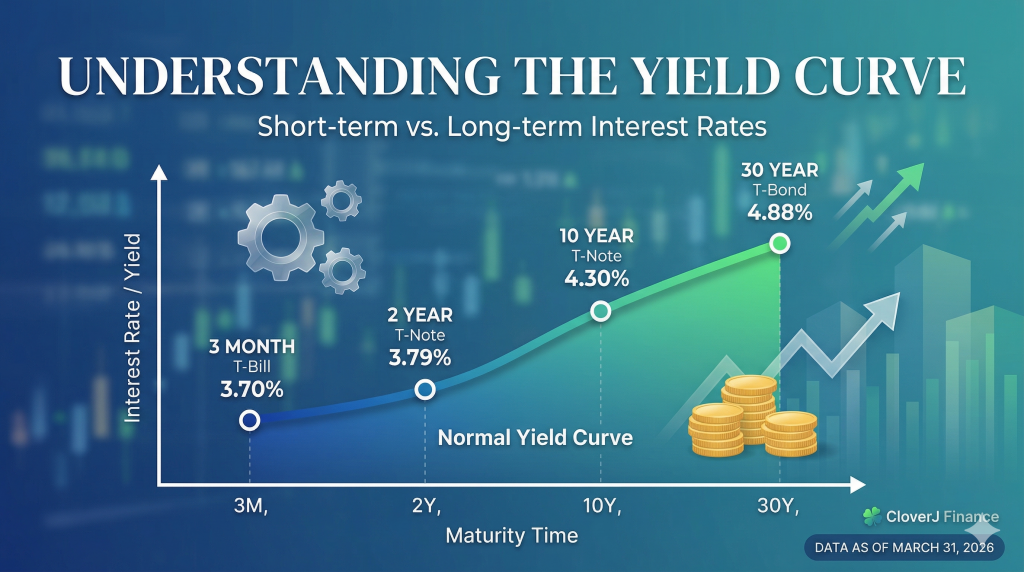
- Short-Term Yields: Reflect current central bank policy. They move in sync with the “now.”
- Long-Term Yields: Reflect expectations about the future. They act as a barometer for economic growth and inflation.
5. Understanding “Tightening” and Inflation
A rate hike doesn’t physically remove money from the world; it simply makes money harder to use. When borrowing becomes expensive, consumption and investment slow down. This is what we call monetary tightening.
Inflation, on the other hand, is the result of the balance between money and supply:

When demand (fueled by money) moves faster than supply can adjust, prices rise. This gap is the root of inflation.
Summary: Why should you care?
Understanding these Economy Basics is the first step toward financial freedom. Bonds provide stability, stocks offer growth, and interest rates act as the gravity that pulls everything together. By knowing how these interact, you can make smarter decisions for your portfolio.
CloverJ’s Personal Take: Looking for the “Why”
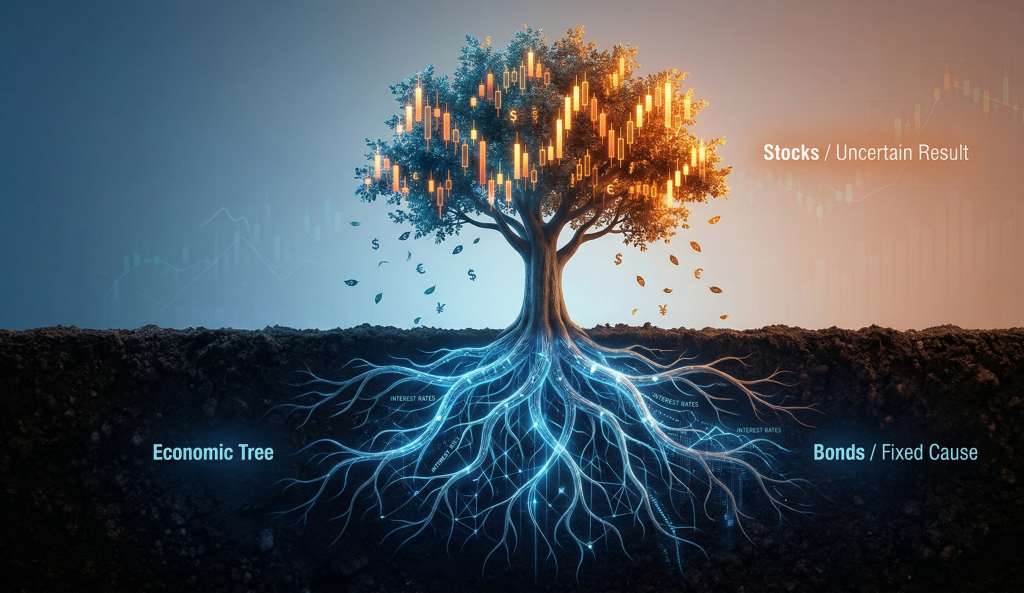
Initially, I thought I wanted to study “Stocks.” I wanted to find the next winning company. But after today’s study, I realized that stocks are the effect, while bonds and interest rates are the cause.
It’s like observing a tree. Most people look at the leaves and branches (Stocks), but the real movement starts in the soil and the roots (Interest Rates and Bonds). From now on, instead of just asking “Is the market going up or down?”, I want to ask: “Why is the money moving this way?” Understanding the “Why” is the first step toward becoming a true observer of the market.
What’s Next? (Day 2 Teaser)
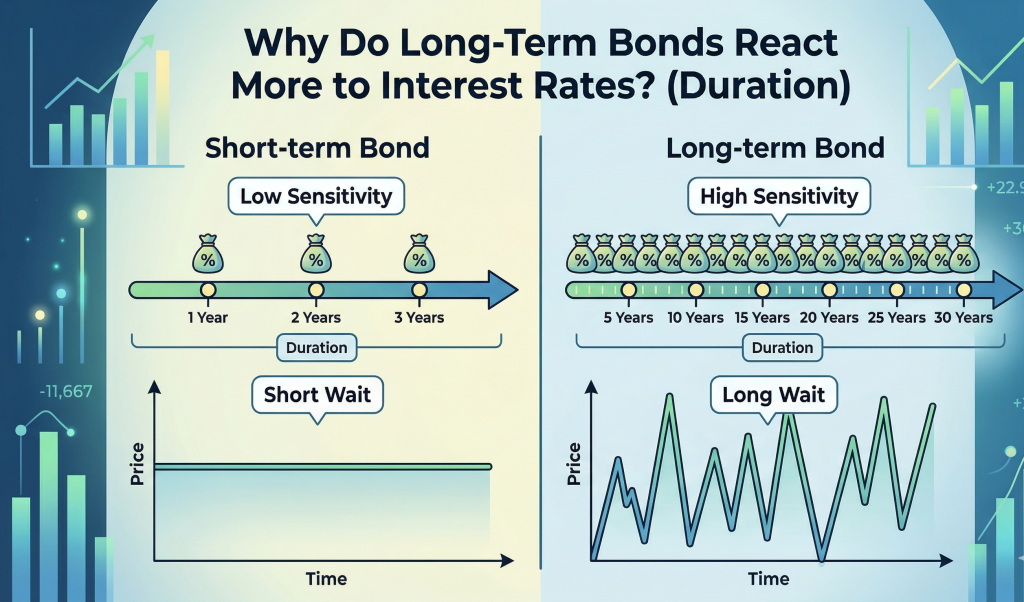
Now that we know why bond prices move opposite to interest rates, there’s one more mystery to solve: Why do some bonds swing so much more than others?
In our next lesson (Day 2), we will dive into Bond Duration. Why does a 30-year bond react like a wild rollercoaster while a 2-year bond stays relatively calm? Think of it like a seesaw—the longer the board, the bigger the ride.
Stay tuned as we explore why “time” is the most powerful factor in the bond market!
If you want to read more about my journey, visit the [Home] page!