From an outside perspective, U.S. politics often reveals how quickly technology can become a public policy issue. In March 2026, one of the clearest examples of this was the growing discussion around Artificial Intelligence and electricity demand.
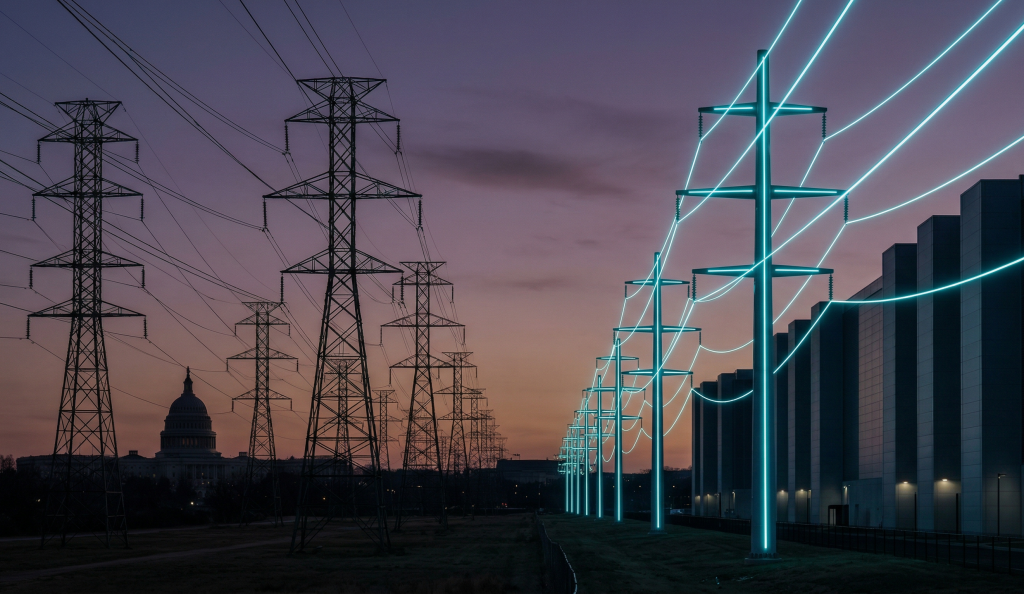
As AI systems expand, so does the amount of energy needed to operate data centers and supporting infrastructure. This has raised a practical question in the United States: if AI development requires major new power resources, who should bear those costs?
The March 4 Ratepayer Protection Pledge
In early March 2026, the White House announced an agreement with seven major technology companies, including Google, AWS, Meta, Microsoft, OpenAI, Oracle, and xAI. The agreement, called the Ratepayer Protection Pledge, centers on the idea that AI-related energy expansion should not automatically increase costs for ordinary households.
According to the announcement, the participating companies committed to several principles.
First, they would seek to develop or secure new sources of energy rather than relying only on existing public grids.
Second, they would cover the cost of major infrastructure needed to connect new data centers, such as transmission lines and substations.
Third, they would support rate structures designed to reduce the financial risk placed on utility companies when large amounts of power capacity are reserved for industrial use.
Fourth, they would contribute to workforce development and local economic support in communities hosting large facilities.
Finally, the agreement also included cooperation during major grid emergencies, when backup power resources might help support broader public needs.
The March 20 Policy Update
Later in the month, the administration introduced the National AI Legislative Framework. This step appears to move beyond a voluntary pledge and toward a more formal policy structure.
The framework aims to provide a more consistent federal approach to AI regulation, while also addressing concerns related to consumer protection, infrastructure planning, and energy affordability.
It also includes discussion of permitting reform, especially for companies that invest in their own energy generation. In that sense, the federal government seems to be pursuing both accountability and incentives at the same time.
Why This Matters
At its core, this debate is not only about AI. It is also about how the costs of rapid technological expansion should be distributed.
Supporters of the pledge argue that households should not face higher utility bills simply because large technology firms are expanding power-intensive data centers nearby. From that perspective, asking companies to pay for the infrastructure they require is a matter of fairness.
Others may worry that if infrastructure obligations become too heavy, they could slow investment or complicate the pace of innovation. That concern is especially relevant as the United States tries to remain competitive in AI development
A Practical Policy Question
From a neutral standpoint, this issue reflects a broader challenge that many countries may soon face. AI innovation brings economic opportunity, but it also creates real physical demands on electricity systems, land use, and local infrastructure.
The U.S. response in March 2026 suggests that policymakers are trying to balance two goals at once: encouraging AI growth while limiting the risk that ordinary consumers will absorb the cost.
Whether this approach proves effective will depend on how the pledge is implemented, how federal legislation develops, and how utilities, regulators, and technology companies respond over time.
Conclusion
As AI infrastructure grows, energy policy is becoming part of the conversation in a much more visible way. The recent U.S. actions do not settle the debate, but they show that the question is no longer theoretical.
It is now a practical issue of public policy: how to support innovation while managing who pays for the systems that make that innovation possible.
CloverJ’s Personal Take: A Faster Lane for Big Tech?
As an observer, I see a subtle but important trade-off here. In exchange for keeping household electricity bills more stable, the government may also be giving large technology companies a faster path through complex energy regulations.
That raises a broader concern. Over time, this could contribute to a system where major AI companies secure dedicated and flexible power options, while the public grid continues to face slower upgrades and long-standing strain. The question is not only about today’s electricity costs, but also about how energy access may be shaped in the future.
It makes me wonder whether the push to support innovation could gradually create a wider gap between private infrastructure and the public systems that most people still rely on.