Welcome back to my economy study journey!
Today, we explore Bond Duration, a key concept in our Economy Basics series.
In Day 1, we learned the golden rule: “When interest rates go up, bond prices go down.” But as I dug deeper, I found a puzzling question: Why do some bonds barely move, while others swing like a wild rollercoaster?
Today, I’m unpacking the secret key to this mystery: Bond Duration.
1. The Core Concept: Time Equals Volatility
The biggest factor determining a bond’s price change is Time.
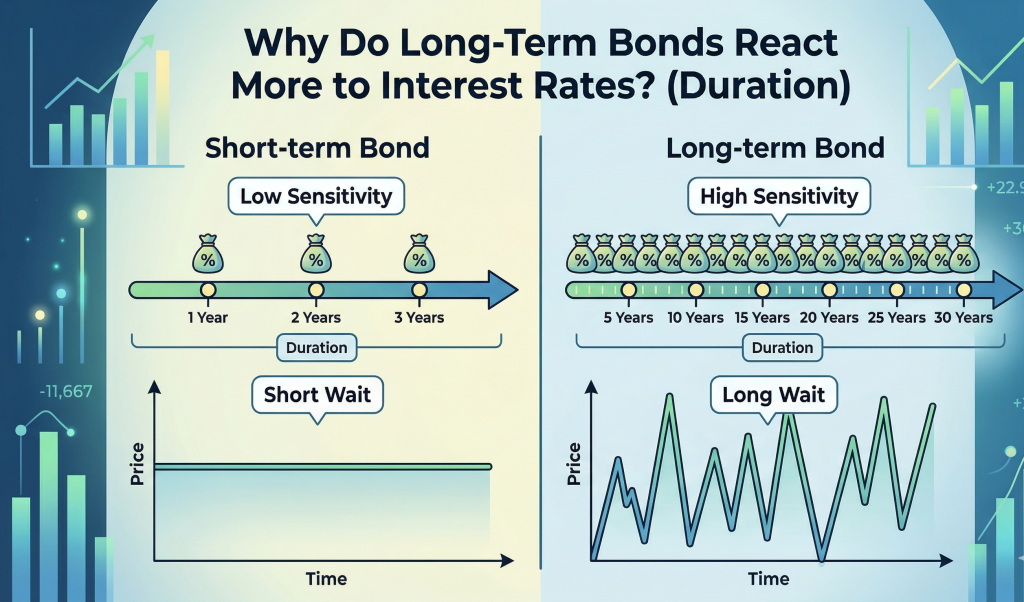
- Short-term Bonds: You get your money back soon. There’s less time for things to go wrong.
- Long-term Bonds: You have to wait a long time. The longer you wait, the more exposed you are to the “price of money” (interest rates) changing.
The Seesaw Analogy: Imagine a seesaw. The further you sit from the center (the interest rate), the higher you soar or the harder you fall when the seesaw moves. Long-term bonds sit at the very edge of that seesaw.
2. What Exactly is Bond Duration?
In simple terms, Bond Duration is the average time it takes for an investor to get their money back (principal + interest).
- 1-Year Bond: “I’ll get my money back soon!” (Low Duration)
- 30-Year Bond: “It’s going to be a long journey…” (High Duration)
Why is Duration so sensitive?
Imagine you bought a 30-year bond with a 5% interest rate. Suddenly, the market rate jumps to 10%. Now, you are stuck receiving 5% less than everyone else for the next 30 years. That “regret” is massive, which is why the market value (price) of your bond crashes to compensate for that long-term loss.
3. Price Movement at a Glance
| Category | Interest Rates Rise (↑) | Interest Rates Fall (↓) |
| Short-term Bonds | Small Price Drop | Small Price Gain |
| Long-term Bonds | Massive Price Drop | Massive Price Gain |
Key Point: If you want to bet on falling interest rates for a big profit, long-term bonds are your best friend. But beware—if rates rise, they can be your worst enemy.
4. Advanced Insight: Politics vs. Central Bank Independence
Lately, there’s been a lot of political pressure on Central Banks to lower interest rates to boost the economy. Does this mean we should go “All-in” on long-term bonds? Not necessarily.
The Battle of Trust
- Politicians: Often want lower rates for short-term economic growth and popularity.
- Central Banks: Focus on long-term stability and fighting inflation.
What if the Central Bank loses its independence? If the market believes the Central Bank is lowering rates just because of political pressure, trust disappears. Investors might fear future inflation, causing long-term bond yields to actually skyrocket and the currency to weaken. In this scenario, a rate cut could actually hurt long-term bond prices.
CloverJ’s Personal Take: It’s All About Trust
I realized today that bond investing isn’t just about math; it’s about Trust. You have to read the room—specifically, the room where the Central Bank meets. Understanding Bond Duration gives me the tools to measure risk, but watching Central Bank independence gives me the wisdom to know when to take it.
What’s Next? (Day 3 Teaser)
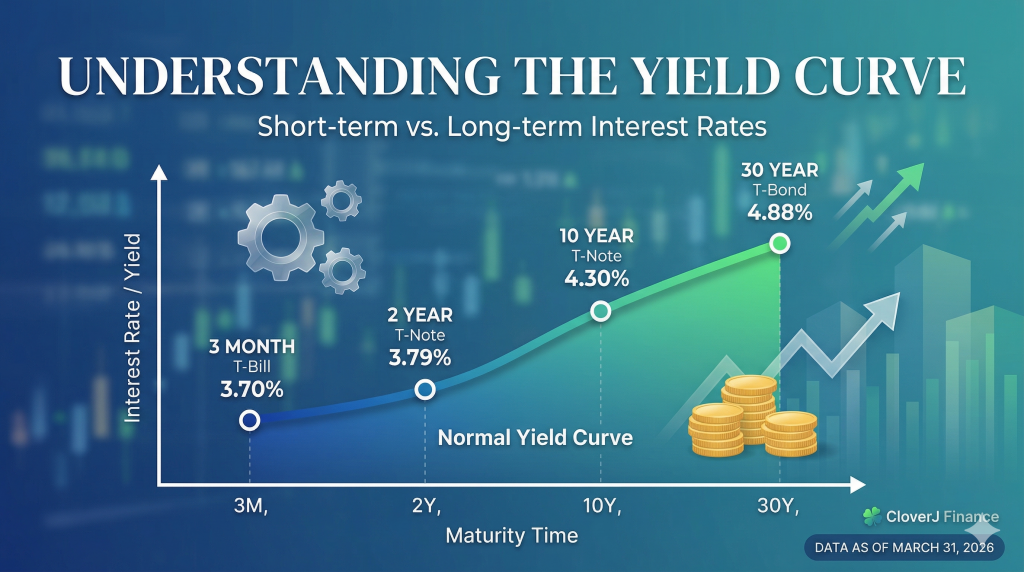
We’ve explored the price of money and the risk of time (Duration). But what happens when we look at short-term and long-term interest rates together? The “gap” between them actually tells a story about the future of the world.
In Day 3, we will break down the 4 Yield Curve Patterns. Is the economy healthy, or is a recession looming around the corner? The shape of the curve holds the answer. Stay tuned as we learn how to read the market’s “crystal ball”!